

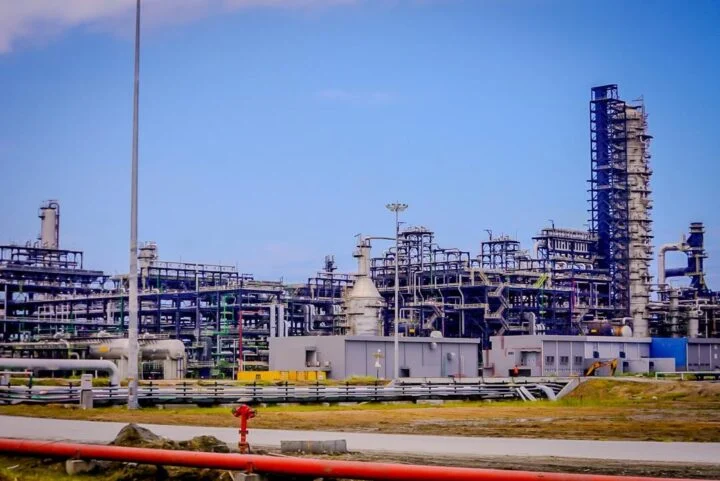
Several African countries now shift sourcing fuel supply to Nigeria as disruptions in the Middle East tighten global availability.
Leading the countries includ South Africa, Ghana and Kenya, as they now look to Dangote Refinery to secure petroleum products, following supply pressures linked to tensions involving Israel, the United States and Iran, and threats to the Strait of Hormuz.
For years, many African nations relied on refineries in the Persian Gulf, but the current crisis has exposed the risks of that dependence which is forcing their governments to seek closer and more stable alternatives.
At the centre of the shift is the Lagos-based refinery owned by Aliko Dangote, which possess650,000-barrel-per-day facility, that began operations in 2024, is increasing output as demand rises across the continent.
Industry sources say several governments have opened talks to secure supply deals, as fears grow over potential fuel shortages.
Despite the surge in interest, analysts warn the refinery cannot meet all of Africa’s needs. Nigeria alone consumes about three-quarters of its output, leaving limited volumes for export.
The situation highlights a wider issue: many African countries still depend heavily on imported refined fuel, even when they produce crude oil.
Governments are already taking steps to manage the pressure. Ethiopia has urged fuel conservation, while companies in South Africa are working to secure supplies for key operations.
Experts say competition for available fuel could intensify in the coming months, pushing demand higher and increasing pressure on supply chains.
Dangote recently said the challenge is no longer about cost but access. “Right now it is not about pricing, it is about availability,” he noted, warning that disruptions could continue.
The crisis is now accelerating calls for more regional refining capacity across Africa, as countries look to reduce reliance on distant suppliers and improve energy security.
