Author: Kunle Adeniyi

  • Kwara killings outrage as governor pledges APC victory

    Kwara killings outrage as governor pledges APC victory

    Anger has grown in Kwara State after Governor AbdulRahman AbdulRazaq promised to deliver the Federal Capital Territory to the All Progressives Congress despite a recent massacre that left at least 162 residents dead in the state.

    Gunmen attacked Woro and nearby Nuku in Kaiama Local Government Area in early February, killing scores, injuring dozens and abducting many others. The violence is part of a wider wave of attacks across rural communities.

    While grief and fear spread among residents, AbdulRazaq appeared in Abuja at the launch of the party’s campaign council for local elections. The Independent National Electoral Commission has fixed 21 February for area council polls in the capital.

    The governor, who chairs the 138-member campaign council, told party leaders he would mobilise support to secure victory for Bola Tinubu and the ruling party. He praised the president’s economic and security policies and said voters in the capital would back the party.

    His remarks drew criticism online, where some users questioned the timing of political mobilisation while communities in his state mourn victims and search for missing relatives.

    The tension deepened after a video circulated showing captives said to have been seized during the Woro attack. In the footage, reportedly obtained by SaharaReporters, armed men identified as members of Boko Haram display rows of women and children who appear distressed and poorly clothed.

    A militant in the clip claims the true number of abductees is 176, far higher than official figures, and accuses authorities of downplaying the scale of the incident. The claims could not be verified independently.

    Kwara has recorded repeated attacks in recent months. Reports indicate that between January and November 2025, more than 200 people were killed and at least 170 abducted across several local councils.

    Authorities say security operations are ongoing, but many residents remain fearful as kidnappings and raids continue in remote areas.

  • Kwara Communities Brace for Strike After Menacing Message

    Residents of Ira, Inaja and Aho in Oyun Local Government Area of Kwara State are on edge after a threatening letter warned of an imminent attack on their communities.

    The note, found on Thursday morning at a market in Ira, claimed to be from a group calling itself “Nigeria Terrorist Association” and said the writers had moved from Kaiama to Oyun and would strike “anytime soon”. Security agencies have since held emergency meetings with local officials and stepped up patrols.

    Locals said fear spread quickly, especially after the recent killings in Woro community in Kaiama, where more than 160 people were reportedly killed by suspected militants linked to Boko Haram.

    According to sources who saw the letter, it contained taunts and threats, warning residents to be ready for an attack at any time. Ira sits near forest routes that connect parts of Kwara to neighbouring states, an area security officials consider vulnerable to infiltration.

    Military sources said troops from a forward base in Ilemona have increased surveillance across the affected communities to prevent any breach. Residents have also been urged to stay alert and report suspicious movement.

    Letter from terrorists

    The threat echoes a similar warning allegedly sent to another Kaiama community shortly after the Woro attack. In that assault, gunmen stormed the town in the evening, killing men, women and children. Among the dead were relatives of the traditional ruler, religious leaders and school staff. The emir escaped.

    Authorities in Kwara have not issued an official statement on the latest letter. For now, residents say anxiety remains high as they wait for reassurance that security forces can prevent another attack.

  • INEC Seeks ₦873.8bn for 2027 Elections

    The Independent National Electoral Commission has asked the National Assembly to approve ₦873.78bn to run the 2027 general elections, more than double the ₦313.4bn used for the 2023 polls.

    INEC chairman Joash Amupitan presented the request in Abuja on Thursday while defending the commission’s 2026 budget proposal. He said the election figure covers all activities tied to the nationwide vote, while ₦171bn is needed for routine operations in 2026, including by-elections and off-cycle polls.

    He broke down the projected election cost into five parts: ₦379.75bn for operations, ₦92.32bn for administration, ₦209.21bn for technology, ₦154.91bn for capital items and ₦42.61bn for other expenses. He said the proposal follows the Electoral Act rule that requires the commission to submit its election budget at least a year before voting.

    The chairman added that the estimate does not include a fresh request from the National Youth Service Corps, which wants about ₦32bn to raise allowances for corps members who serve as ad hoc election staff.

    INEC said the Finance Ministry set a ₦140bn spending cap for its 2026 budget, but the commission proposed ₦171bn, citing rising personnel and election costs. Amupitan argued that strict envelope budgeting does not suit the commission because election work often demands urgent funding.

    Lawmakers at the session backed calls for flexible financing. Senator Adams Oshiomhole said outside agencies should not dictate INEC’s funding model given its sensitive role. Senator Simon Lalong pledged legislative support to ensure adequate funding.

    House committee chair Bayo Balogun also promised backing but warned the commission against overpromising. He cited the 2023 elections, when expectations about real-time result uploads created public concern.

    The joint committee recommended releasing INEC’s annual budget in full and at once to allow early planning for 2027.

  • Conference Committee Set to Settle Electoral Bill Clash

    Conference Committee Set to Settle Electoral Bill Clash

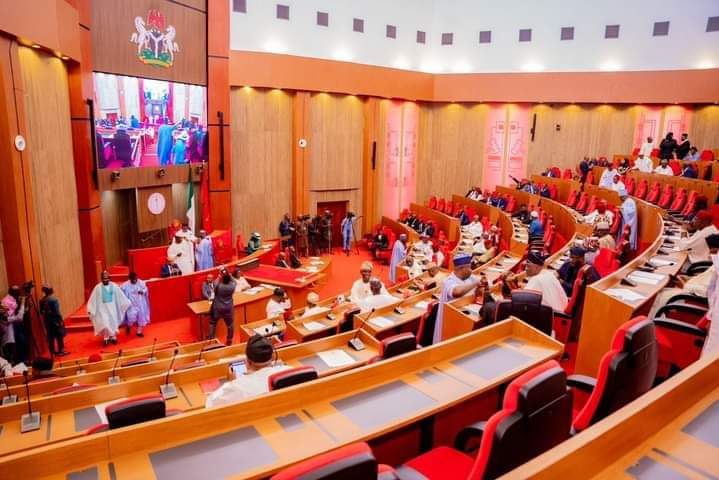
    A 12-member Senate panel has been formed to reconcile differences between lawmakers and the House of Representatives over Nigeria’s Electoral Act amendment.

    The committee, chaired by Senator Simon Lalong, will meet House conferees to agree on a single text, particularly on how election results should be transmitted.

    The Senate supports electronic uploads with a backup manual process. The House insists on mandatory real-time transmission.

    Senate leaders said the panel has been asked to complete work quickly so the president can sign the bill within weeks.

    A heated Senate sitting forced lawmakers to revisit and amend a key section of Nigeria’s Electoral Act reform bill before final approval.

    The dispute began when Senate Chief Whip Mohammed Monguno moved a motion to reconsider a clause already passed earlier in February. Some senators questioned whether the chamber could reopen a decision in the same session, triggering loud protests.

    After a voice vote allowed the motion, the Senate revised the clause to permit electronic transmission of results with a manual fallback if technology fails. Senator Enyinnaya Abaribe demanded a recorded vote but later withdrew the request, allowing the amendment to stand.

    Senate leaders said ambiguity over wording in the earlier version had caused public concern and needed urgent clarification.

    The chamber then adopted the official record of proceedings, closing the tense session.

  • Senate U-turns on Electoral Act, reopens door to electronic results transmission

    Senate U-turns on Electoral Act, reopens door to electronic results transmission

    The Senate has reversed its earlier decision on the Electoral Act amendment, restoring a provision that allows the electronic transmission of election results to the Independent National Electoral Commission’s Result Viewing Portal (IREV).

    At an emergency plenary session on Tuesday, lawmakers agreed to re-amend the bill after intense public backlash over the rejection of electronic transmission from polling units. The revised provision permits electronic transmission but stops short of making it mandatory.

    Under the new amendment, results may be transmitted electronically after vote counting. However, where internet connectivity fails, Form EC8A — the physical result sheet — will serve as the primary basis for result collation.

    The decision followed a motion moved by the Senate Chief Whip, Tahir Monguno, who said the reversal was necessary to align the law with public expectations.

    “This amendment is to bring our laws in line with the wishes and aspirations of Nigerians,” Mr Monguno told the chamber, acknowledging that the earlier version of the bill had generated widespread controversy.

    Only days earlier, Mr Monguno had argued in favour of retaining the existing provision in Clause 60 of the 2022 Electoral Act, which allows the transmission of results to collation centres. On Tuesday, he said fresh concerns had emerged that required further legislative review to ensure credible elections.

    The Minority Leader, Abba Moro, seconded the motion, which was approved through a voice vote presided over by Senate President Godswill Akpabio.

    The Senate’s initial rejection of electronic transmission last week triggered protests and sharp criticism from opposition parties, civil society groups and election observers. Demonstrations were held at the National Assembly, with prominent figures including Labour Party’s 2023 presidential candidate Peter Obi, former ministers Rotimi Amaechi and Simon Dalung, and activist Omoyele Sowore calling for a rethink.

    Public debate focused on fears that removing electronic transmission would weaken transparency and open room for manipulation.

    Mr Akpabio later confirmed that lawmakers had deliberately removed the requirement for mandatory real-time transmission, citing concerns that network failures during elections could lead to legal disputes.

    With the latest amendment, the Senate has acknowledged those concerns while reinstating electronic transmission as an option, leaving the final balance between technology and manual processes open as the bill progresses.

  • Live Result Uploads Risk Failure in 301 LGAs, PeacePro Tells Lawmakers

    The Foundation for Peace Professionals, PeacePro, has cautioned lawmakers against adopting a rigid law mandating live electronic transmission of election results across Nigeria, warning that such a move ignores deep gaps in digital infrastructure.

    In a statement on the national debate over electoral reforms, the group said technology can improve transparency but must reflect conditions on the ground. PeacePro noted that uneven access to banking and internet services could undermine any law that demands instant result uploads from all polling units.

    Citing data from the Association of Mobile Money and Bank Agents in Nigeria, PeacePro said about 300 of Nigeria’s 774 local government areas have no commercial bank branch. It added that government planning figures show roughly 301 LGAs still lack reliable internet access, a key requirement for live electronic transmission.

    The group said the digital divide remains stark, with only 23 per cent of rural communities having internet access compared with 57 per cent in urban areas. National internet usage stood at about 36 per cent in 2024, according to official estimates.

    PeacePro argued that these realities do not rule out electronic transmission but demand a flexible legal design. It warned that a law requiring immediate uploads from every polling unit, without allowances for poor connectivity, could trigger delays, legal disputes and manipulation.

    Instead, the organisation proposed a system that allows offline capture of results, followed by upload within a defined time window once connectivity becomes available. It recommended secure storage on devices, automatic syncing, satellite support at collation centres and staged transmission from polling units to higher levels.

    PeacePro also called for the mandatory upload of scanned result sheets and figures, similar to existing BVAS and IReV processes, to strengthen verification. It urged the inclusion of criminal penalties for refusal to upload results, device tampering or deliberate sabotage.

    Looking at global practice, the group said no country operates instant live transmission from every polling unit without exceptions. It cited disputes in Kenya linked to network failures and noted that even highly digitised systems in Brazil and Estonia do not rely on live streaming from all polling stations.

    PeacePro said credible elections depend on laws that are workable, evidence-based and suited to Nigeria’s infrastructure, not idealistic mandates that ignore existing gaps.

  • APC Explains Delay in Formal Welcome for Rivers Governor Fubara

    APC Explains Delay in Formal Welcome for Rivers Governor Fubara

    The All Progressives Congress has said the delay in formally welcoming Rivers State Governor Siminalayi Fubara into the party is due to political timing and regional sensitivities, not doubts over his authority.

    Speaking on TVC on Sunday, APC National Chairman Professor Nentawe Yilwatda said the party decided to prioritise activities in northern states ahead of planned events in the south.

    He explained that Ramadan influenced the party’s schedule, as many northern communities are sensitive to political gatherings during the fasting period.

    “We have Kano we’re preparing for. When you’re dealing in politics, we opted to clear the north first because Ramadan is coming and most of the people in the north are Muslims,” Yilwatda said.

    According to him, the party agreed to complete formal receptions involving northern governors before shifting focus to the south, where Ramadan does not pose similar constraints.

    Yilwatda stressed that the delay had no connection to Fubara’s standing or influence within the party.

    “These are strategies that acknowledge the sensitivity of each community. It has nothing to do with Siminalayi Fubara not having authority,” he said.

    Responding to suggestions that Fubara lacks control as APC leader in Rivers State, the chairman dismissed the claim and challenged critics to provide evidence.

    “I’m the national chairman. Who complained? What petition? When there is no petition, the media should not create one and become the petitioners, the judge and the jailer at the same time,” he said.

    Yilwatda also addressed comments by Federal Capital Territory Minister Nyesom Wike about political actors in Rivers aligning under President Bola Tinubu’s Renewed Hope agenda. He said such groups were not part of the APC’s official structure.

    “Support groups are separate from party activities,” he added.

    Fubara defected from the Peoples Democratic Party to the APC on December 9, 2025, amid a prolonged political crisis in Rivers State following his fallout with Wike. The dispute has reshaped alliances in the state and intensified manoeuvring ahead of the 2027 elections.

  • Bandits Attack Koro Community, One Confirmed Dead

    At least one person has been confirmed dead following an attack on Koro community in Ekiti Local Government Area of Kwara State, amid reports of renewed bandit violence in the area.

    Residents said armed attackers stormed the community on Sunday, triggering panic and forcing people to flee. As of the time of filing this report, the full scale of casualties remains unclear and details of the assault are still emerging.

    Security authorities are yet to issue an official statement on the incident.

    Koro is located close to Egbe in Yagba West Local Government Area of neighbouring Kogi State, raising fears of possible spillover attacks into nearby communities. Residents in the area have been advised to remain indoors and avoid movement while the situation unfolds.

    Local sources described the atmosphere as tense, with families seeking safety and community leaders calling for urgent security intervention. Communications from the area have been limited, making it difficult to verify the extent of damage or displacement.

    The attack comes weeks after deadly assaults in other parts of Kwara State, deepening concerns about the spread of armed groups in the region.

    Between February 3 and 4, 2026, gunmen attacked Woro and Nuku villages in Kaiama Local Government Area, killing at least 162 people, injuring dozens and abducting several others. Homes and public buildings were set ablaze, leaving entire communities destroyed.

    The attackers were believed to be linked to extremist factions operating across state borders. Survivors of the Kaiama attacks reported mass shootings, arson and forced abductions, with many residents displaced.

    President Bola Ahmed Tinubu condemned the attacks and ordered the deployment of an army battalion to Kwara State to restore order and protect civilians.

    Despite the deployment, residents in border communities continue to express fear, citing the ease with which armed groups move between Kwara and neighbouring states.

    Authorities are expected to provide updates on the Koro attack as security assessments continue.

  • Kwara Attack Survivors Say Killings Continued After Helicopter Left

    Survivors of the deadly attack on Woro community in Kaiama Local Government Area of Kwara State say terrorists continued killing residents even after a helicopter briefly hovered over the area without intervening.

    ZulQharnain Musa, media aide to the Kaiama council chairman, said the assault began around 5pm on Tuesday when hundreds of armed attackers rode into the village on motorcycles from nearby forest areas.

    Speaking to The Punch, Musa said the assailants were armed with AK-47 rifles, pump-action guns and explosives, and met no resistance on arrival.

    “They surrounded the town, brought people out of their homes, restrained them and carried out executions,” he said. “They also attacked the Emir’s palace, forced out his wife and children and set the building on fire.”

    He said motorists on the federal road passing through Woro were also stopped and attacked, describing the assault as organised and deliberate.

    Musa said residents fled into bushes and farms, but many were shot while trying to escape. He added that a white helicopter hovered over the community briefly but left without action, after which the attackers intensified the killings until about 8pm.

    According to him, a suspected military aircraft later returned, forcing the attackers to withdraw, but the violence resumed once it departed. He said the attackers disguised their return by calling people out for prayers, with the killings continuing until about 2am.

    Musa said more than 200 people were feared dead, with about 170 bodies buried within two days. He added that women were abducted and bodies were still being recovered from rivers, bushes and farmlands.

    “The community is almost empty now. People have fled in fear. Farming and trading have collapsed,” he said.

    He urged the government to reclaim the forests, dismantle terrorist camps and provide urgent humanitarian support to survivors.

  • Shettima Visits Woro After Deadly Kaiama Attack

    Shettima Visits Woro After Deadly Kaiama Attack

    Vice President Kashim Shettima has visited Kwara State to assess the impact of the deadly attack on Woro village in Kaiama Local Government Area, where 75 residents were killed.

    Shettima arrived in the state on Saturday on the directive of President Bola Ahmed Tinubu, according to a statement by his media aide, Stanley Nkwocha. The visit was aimed at conveying federal condolences and reviewing the security situation in the affected community.

    “The President has directed that the Vice President assess the situation firsthand and convey federal condolences to the grieving families,” Nkwocha said.

    The Vice President was received on arrival by Kwara State Governor AbdulRahman AbdulRazaq and other state officials. The visit followed widespread outrage over the attack, which occurred on Tuesday night and targeted residents of Woro and neighbouring Nuku community.

    Governor AbdulRazaq earlier said the victims were local Muslims who were killed for refusing to submit to extremists preaching what he described as a strange doctrine. While police confirmed 75 deaths, initial reports from the area suggested the toll could be higher.

    The assault was said to have followed an attempt by militants to forcibly indoctrinate members of the community, which was resisted by residents.

    Shettima’s aide said the Vice President was also conveying assurances from President Tinubu that those responsible would be brought to justice.

    “VP Shettima is conveying President Tinubu’s strong assurances that the Federal Government will not relent until those responsible are tracked, apprehended and brought to justice,” Nkwocha said.

    President Tinubu has condemned the killings, describing the attackers as cowardly and beastly. He approved the deployment of an Army battalion to Kaiama under Operation Savannah Shield to restore security and protect vulnerable communities.

    The President also directed federal and state agencies to work closely to support victims and ensure relief reaches affected families, as security operations continue in the area.