

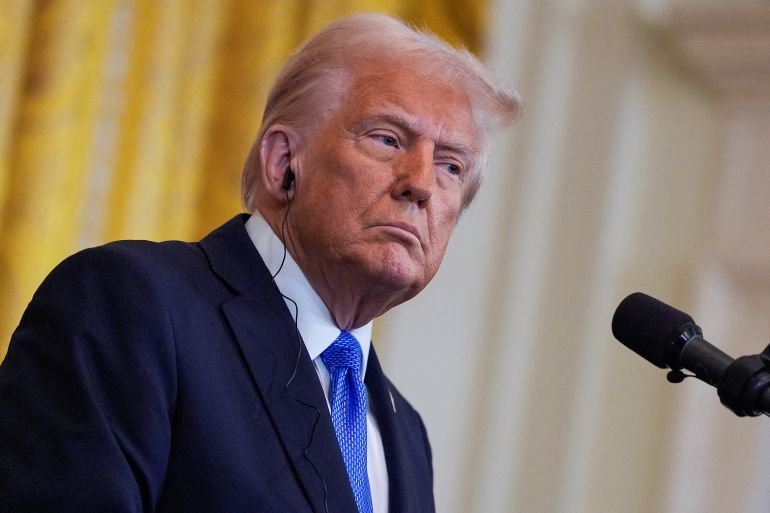
Several members of North Atlantic Treaty Organization have rejected calls by Donald Trump to help reopen the Strait of Hormuz as the conflict involving Iran continues to disrupt global energy supplies.
Trump urged around seven countries to support a US-led effort to secure the narrow waterway, warning that NATO could face a “very bad future” if allies refuse to assist.
The strait is one of the world’s most critical shipping lanes, carrying roughly a fifth of global oil supplies. Disruptions there have pushed international crude prices to about $104 per barrel, the highest level since mid-2022.
However, several European governments have cast doubt on any NATO role in reopening the passage.
Johann Wadephul said the alliance had not taken any decision to intervene in the waterway.
“I don’t see that NATO has made any decision in this direction or could assume responsibility for the Strait of Hormuz,” he said.
The United Kingdom has also ruled out treating the operation as a NATO mission. Prime Minister Keir Starmer said reopening the strait would require a credible international plan but warned Britain would not be drawn into a wider war.
Other European states have taken similar positions. Greece said it would not participate in military operations in the waterway, while Italy called for diplomacy instead of further military escalation.
Meanwhile, Germany rejected suggestions that European naval forces should join the conflict. Defence Minister Boris Pistorius questioned what a small number of European warships could achieve compared with the US Navy.
“This is not our war,” he said.
The disagreement highlights growing divisions among Western allies as tensions rise across the Middle East.
Iran has tightened control of the Strait of Hormuz since the conflict began, reducing tanker traffic and raising fears of a global energy crisis.
Shipping activity through the passage remains limited. Maritime tracking data shows only a small number of vessels crossing the route, including an oil tanker carrying crude from the United Arab Emirates that recently passed through the strait with its tracking system active.
The situation has also triggered security concerns across the region. Explosions were reported in Doha, while flights at Dubai International Airport were temporarily suspended after a drone strike caused a fire near fuel facilities.
Trump has said he is continuing discussions with European and Asian partners about forming a coalition to secure the waterway and restore oil shipments.
But with key NATO allies refusing to take part in military action, the effort faces growing uncertainty as the conflict threatens global markets and energy supplies.
