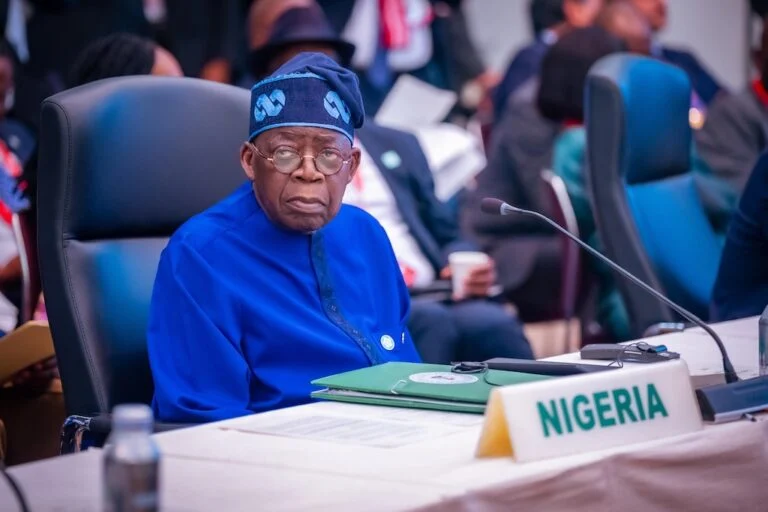
President Bola Tinubu 2026 economic promises have become a central talking point as Nigerians enter a new fiscal year shaped by reforms, rising costs, and public anxiety. In his New Year address, President Bola Tinubu said 2026 would mark a stronger phase of economic growth. He pointed to falling inflation, improved foreign reserves, and higher investment flows.
The message was clear. The government believes the hardest phase of reform is over. The question for Nigerians is whether daily life will reflect those gains.
Tinubu 2026 Economic Promises and the Big Picture
At the core of Tinubu 2026 economic promises is the claim that Nigeria’s economy is stabilising after a period of shock. The President said reforms carried out in 2024 and 2025 had reset public finances and restored confidence. He argued that the country recorded steady GDP growth despite global pressures.
Government figures suggest annual growth could exceed four per cent. Officials also highlight trade surpluses and stronger exchange rate management. These numbers matter to investors and policymakers, but many Nigerians judge progress by prices, jobs, and income.
Inflation Claims Versus Household Reality
One of the most striking claims in the Tinubu 2026 economic promises is that inflation dropped below 15 per cent by the end of 2025. The administration says tighter monetary policy and fiscal discipline helped curb price growth.
For households, the picture remains mixed. Food prices stay high in many markets. Transport costs remain sensitive to fuel prices. Rent continues to rise in urban centres. Lower inflation does not mean cheaper goods. It often means prices rise more slowly, not that they fall.
Economic Growth and Job Creation Questions
Economic growth is meaningful only if it creates jobs. Tinubu’s government says growth in 2026 will support employment, especially through agriculture, trade, and local production. The Renewed Hope Ward Development Programme aims to engage at least 10 million Nigerians.
Critics note that job growth has lagged behind population growth for years. Youth unemployment remains high. Many jobs created are informal and low-paying. For Tinubu 2026 economic promises to gain public trust, job quality will matter as much as job numbers.
Foreign Investment and Market Confidence
Foreign direct investment featured prominently in the President’s address. According to official data, inflows rose sharply in late 2025. The government credits policy reforms and improved market signals.
International ratings agencies have responded with cautious optimism. Still, investors often focus on policy consistency, security, and infrastructure. Any policy reversals or instability could slow momentum. Sustained inflows depend on whether reforms remain predictable beyond political cycles.
Tinubu 2026 Economic Promises and Tax Reforms
Tax reform is a major pillar of Tinubu 2026 economic promises. New tax laws aim to simplify collection, widen the tax base, and reduce multiple taxation. Low-income earners below the set threshold are exempt from personal income tax.
Supporters say this could protect vulnerable Nigerians and support small businesses. Critics worry about enforcement capacity and trust. Nigerians often question whether higher tax revenue translates into better services. Transparency will be key to public acceptance.
For more on Nigeria’s tax framework, see:
Infrastructure Spending and Fiscal Discipline
The President promised continued investment in roads, power, ports, railways, and healthcare. Infrastructure spending is presented as a growth driver and a job creator.
The challenge lies in funding. Debt servicing still consumes a large share of revenue. While reforms aim to increase fiscal space, delays in project delivery remain common. Nigerians will watch whether 2026 brings visible progress or recycled announcements.
Security as an Economic Factor
Tinubu linked economic growth to improved security. He cited joint operations with international partners and ongoing military campaigns against armed groups. Security affects farming, transport, and investor confidence.
Persistent insecurity raises costs and disrupts supply chains. Even strong economic policies struggle in unstable environments. The success of Tinubu 2026 economic promises partly depends on whether security conditions improve in key regions.
Stock Market Gains and Who Benefits
The Nigerian Stock Exchange recorded strong gains in 2025. The government presents this as evidence of renewed confidence. Market growth can support pensions and long-term savings.
However, stock market gains mainly benefit a small segment of the population. Many Nigerians remain outside formal investment markets. Broader financial inclusion would help spread these benefits beyond institutional investors.
Cost of Living and Public Expectations
Public reaction to Tinubu 2026 economic promises remains cautious. Many Nigerians accept that reforms take time. Others feel the burden has been uneven. Fuel subsidy removal and currency changes hit consumers hard.
Expectations in 2026 will focus on relief. Stable prices, reliable power, affordable transport, and job opportunities will shape public opinion more than macroeconomic charts.
Political Context and Credibility
Economic promises do not exist in isolation. Political trust affects how citizens interpret government claims. With 2027 on the horizon, economic messaging carries political weight.
Consistency between words and outcomes will determine credibility. Nigerians have heard reform promises before. Delivery, not declarations, will define the legacy of Tinubu 2026 economic promises.
What Nigerians Should Watch in 2026
Several indicators will reveal whether promises translate into progress:
- Food and transport prices
- Employment data
- Power supply stability
- Tax enforcement fairness
- Security developments
Clear communication and regular updates will help manage expectations. Silence or mixed signals could deepen scepticism.
Conclusion: Cautious Hope, Hard Tests Ahead
Tinubu 2026 economic promises outline an ambitious vision of recovery and growth. The government presents data that suggest improvement. Many Nigerians remain unconvinced, shaped by daily pressures and past experiences.
2026 will test whether reforms move from policy statements to lived reality. Economic progress must reach households, not just balance sheets. Only then will the promises of a stronger economy feel real to ordinary Nigerians.