

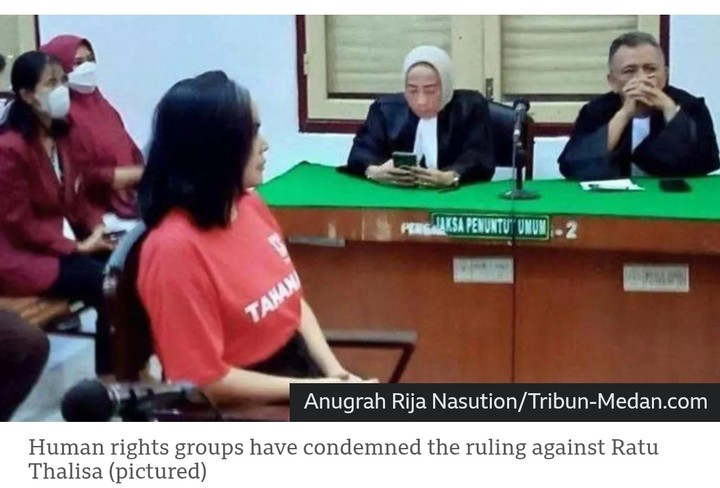
- Human rights groups condemn the 34-month sentence, calling it an attack on freedom of expression.
An Indonesian TikToker has been sentenced to nearly three years in prison for blasphemy after making remarks about Jesus during a livestream. Ratu Thalisa, a Muslim transgender woman with over 442,000 followers, was found guilty of spreading hatred under Indonesia’s controversial Electronic Information and Transactions (EIT) Law.
The incident occurred when Thalisa, responding to a comment urging her to cut her hair to look more masculine, jokingly “spoke” to a picture of Jesus on her phone, telling him to get a haircut. The court in Medan, Sumatra, ruled on Monday that her comments could disrupt “public order” and “religious harmony,” sentencing her to two years and 10 months in jail.
The case stemmed from complaints filed by Christian groups, who accused Thalisa of blasphemy. Prosecutors had initially sought a sentence of more than four years and have since appealed the court’s decision, claiming the punishment was too lenient. Thalisa has seven days to file her own appeal.
Human rights organizations, including Amnesty International, have condemned the verdict, calling it a violation of freedom of expression. Usman Hamid, Executive Director of Amnesty International Indonesia, described the sentence as “a shocking attack on Ratu Thalisa’s freedom of expression” and urged authorities to overturn the conviction.
“While Indonesia should prohibit the advocacy of religious hatred that constitutes incitement to discrimination, hostility, or violence, Ratu Thalisa’s speech act does not reach that threshold,” Hamid stated. He also called for significant revisions to the EIT Law, which has been widely criticized for its vague provisions on defamation, hate speech, and immorality.
The EIT Law, enacted in 2008 and amended in 2016, was designed to protect individuals’ rights in online spaces. However, it has been accused of stifling free speech, with at least 560 people charged under the law between 2019 and 2024, according to Amnesty International. Of these, 421 were convicted, including several social media influencers.
Thalisa’s case is unusual in that it involves a Muslim woman being prosecuted for allegedly insulting Christianity. Most EIT Law cases in Indonesia, a predominantly Muslim nation, have involved religious minorities accused of blaspheming Islam.
This ruling follows other high-profile cases, including a Muslim woman sentenced to two years in prison in 2023 for eating pork after reciting an Islamic phrase in a TikTok video. In 2024, another TikToker was detained for posting a quiz asking children which animals could read the Quran.
As Thalisa’s case draws international attention, it highlights ongoing tensions between Indonesia’s commitment to religious harmony and its enforcement of laws that critics say undermine freedom of expression.
